Trump backs stricter ethics rules to rescue the Clarity Act
President Trump agrees to tighter conflict‑of‑interest rules and state enforcement powers to keep the Clarity Act alive, reshaping crypto oversight.
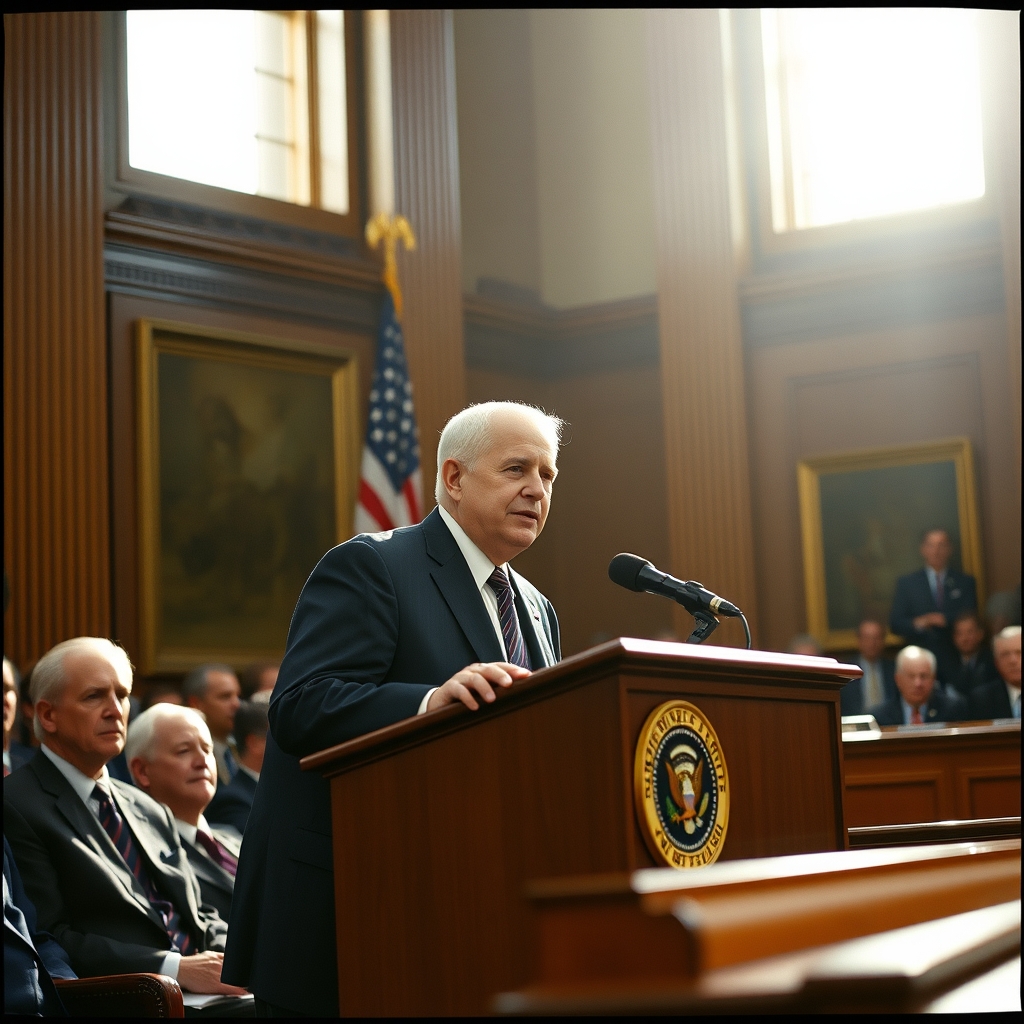
According to CoinDesk: Bitcoin, Ethereum, Crypto News and Price Data, President Donald Trump agreed to expanded conflict‑of‑interest rules and state‑level enforcement powers to secure key Senate votes for the Clarity Act.
The headline shows a political compromise rather than a technical breakthrough. By attaching stricter ethics standards to a crypto‑focused bill, the administration hopes to calm concerns that lawmakers could profit from the very regulations they shape, while also giving states a clearer role in policing the market.
What happened
The Clarity Act, a piece of legislation that would create a federal framework for digital asset supervision, stalled in the Senate earlier this year amid accusations that several members had close ties to crypto firms. According to the report, Trump stepped in and promised to tighten conflict‑of‑interest rules for members of Congress and to grant states more direct enforcement authority. The promise was framed as a concession to a handful of swing‑state senators who demanded stronger ethical safeguards before they would back the bill.
The conflict‑of‑interest provisions would require elected officials to disclose any personal holdings or financial relationships with crypto companies and to recuse themselves from votes where a direct benefit could be demonstrated. In addition, the bill would allow state attorneys general to pursue violations of the new federal standards without waiting for a federal agency to act first. The combination of these two moves was presented as the missing piece that could finally push the Clarity Act over the Senate’s 50‑vote threshold.
Why it works that way
Legislative bargaining often uses procedural levers to address political risk. Conflict‑of‑interest rules function as a credibility filter: when a lawmaker’s financial exposure to an industry is public, the perception of bias drops, and other members feel safer supporting the measure. The mechanism is simple—transparent disclosures create a deterrent against self‑dealing because any hidden benefit could be exposed and weaponized by opponents.
State‑level enforcement powers work on a different principle. Historically, the federal government has been the primary regulator of securities and commodities, but crypto’s borderless nature makes enforcement difficult when a single agency must chase assets across multiple jurisdictions. By empowering state attorneys general, the bill creates a parallel enforcement track. States can act quickly on local violations—such as unregistered token sales targeting residents—while the federal framework sets the baseline rules. This dual‑track approach spreads the workload and adds political buy‑in from governors who often feel sidelined by Washington.
Both mechanisms address the core objection that had blocked the bill: a fear that the federal crypto regime would be shaped by insiders with a vested interest, and that the enforcement arm would be too weak to deter bad actors. By tightening ethics oversight, the bill seeks to remove the “insider‑benefit” narrative; by delegating enforcement, it promises a more robust, on‑the‑ground policing capability.
What changes because of it
If the Senate adopts the amended Clarity Act, the immediate change will be a new set of disclosure requirements for all members of Congress. That alone could shift the political calculus for future crypto legislation, as any perceived conflict would be flagged before a vote. In practice, the rule could deter lawmakers from holding significant crypto positions, or at least force them to place assets in blind trusts.
The state‑level enforcement clause adds a layer of accountability that was missing from earlier drafts. Attorneys general in crypto‑active states such as New York, Texas, and California would gain the authority to bring civil actions against violators of the federal standards, potentially leading to more frequent and localized enforcement actions. This could create a patchwork of state‑driven precedents that, while still under a federal umbrella, may vary in severity and focus.
The trade‑off here is clarity versus uniformity. While the dual‑track system may increase overall enforcement, it also opens the door to inconsistent rulings across state lines. Market participants could face divergent penalties for the same conduct, depending on where the alleged violation occurred. Moreover, the ethics rule, though well‑intentioned, relies on accurate self‑reporting and a robust audit process; without a dedicated enforcement body, violations could slip through the cracks.
For holders of Bitcoin, Ethereum, and other major tokens, the changes are unlikely to affect day‑to‑day price movements but may influence the regulatory environment in which exchanges and custodians operate. Entities that already comply with existing federal guidance may find the new state‑level oversight redundant, while smaller projects that operate primarily in a single jurisdiction could face an added compliance burden.
Investors and developers who are not directly involved in lobbying should watch two developments closely: the implementation details of the disclosure system, and how state attorneys general coordinate with the federal agency that will ultimately oversee the crypto market. If the coordination is smooth, the dual‑track model could provide a more resilient safety net. If not, it could create jurisdictional battles that distract from the core goal of protecting consumers.
In short, the agreement adds procedural safeguards rather than sweeping policy shifts. The Clarity Act’s core aims—defining what counts as a security, establishing a licensing regime for exchanges, and clarifying tax treatment—remain unchanged. What changes is the political scaffolding that supports those aims, and the balance of power between Washington and the states.