CFTC pushes crypto rules to White House as Congress stalls on Clarity Act
CFTC sends a crypto‑rule proposal to the White House after the Senate rejected the Clarity Act, aiming to shape market oversight while the SEC rolls out its own exemptions.
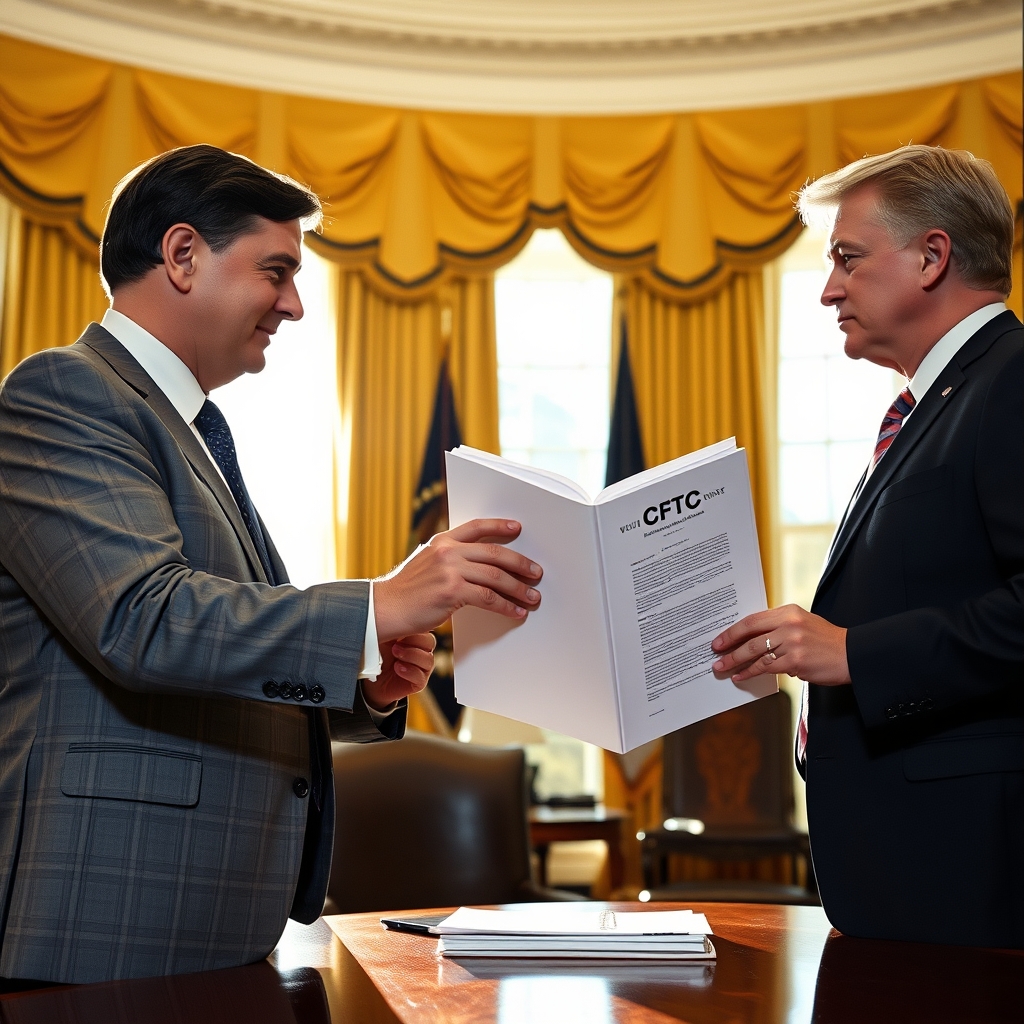
According to CoinDesk, the Commodity Futures Trading Commission (CFTC) handed a fresh set of crypto‑market rules to the White House Office of Management and Budget (OMB) on Thursday, after the Senate failed to pass the Clarity Act earlier in the week.
The move signals the agency’s willingness to act unilaterally when Congress stalls, and it arrives alongside a new SEC “innovation exemption” that lets qualifying platforms trade tokenized stocks without registering as securities exchanges.
What happened
The CFTC’s draft proposal was submitted to the OMB for an inter‑agency review. The agency did not disclose which digital assets the rules would cover, what technical or compliance steps exchanges would need to meet, or how far the CFTC believes its statutory authority extends. After the OMB finishes its review, the draft returns to the CFTC for an internal vote, followed by a period of public comment. Only after a second vote could the rules become binding.
The timing is notable. The Senate’s rejection of the Clarity Act – legislation that would have provided a comprehensive federal definition of “digital asset” and clarified jurisdiction – left a regulatory vacuum. In response, the SEC issued an “innovation exemption” on the same day, granting platforms a five‑year window to offer on‑chain trading of certain tokenized equities without registering as a securities exchange.
In a related step, the CFTC published a no‑action letter on Friday. The letter gives a narrow class of software providers – those that simply display market data and allow users to submit orders directly to a registered broker‑dealer – a way to connect users to regulated derivatives markets without registering as introducing brokers. The providers may charge transaction‑based fees but cannot hold customer assets, generate trade signals, or control order routing. They must provide risk disclosures, keep records, and follow marketing rules until the CFTC adopts formal guidance on software developer registration.
Both agencies have pledged to keep working together to provide clearer rules under their existing authority, even as the Clarity Act remains stalled.
Why it works that way
The CFTC’s authority stems from the Commodity Exchange Act, which gives it jurisdiction over derivatives contracts such as futures, options, and swaps. When a new market segment—like crypto‑based derivatives—emerges, the agency must first draft rules, then route them through the OMB. The OMB’s role is to ensure that any new regulation aligns with the administration’s broader policy goals and budgetary constraints before it reaches the President for final sign‑off.
Because Congress has not enacted a dedicated crypto statute, the CFTC relies on its existing statutory footing. By moving forward with a rule proposal, the agency can establish a de‑facto baseline for how derivatives platforms should operate, even if the exact scope is still vague. This approach also pressures legislators; the threat of agency‑driven rules can motivate Congress to act before the agency’s version becomes entrenched.
The SEC’s exemption follows a similar logic. The agency’s mandate over securities includes tokenized stocks, but a full‑scale registration requirement could stifle experimentation. The exemption creates a limited, time‑bound sandbox where platforms can test on‑chain trading models while the SEC monitors for systemic risk.
No‑action letters are a regulatory tool that allows agencies to grant limited relief without formal rulemaking. By stating that it will not pursue enforcement against certain software providers, the CFTC gives the market a clear, if temporary, path to operate under existing rules. The conditions attached—risk disclosures, record‑keeping, marketing limits—are meant to preserve investor protections while the agency works on a permanent framework.
What changes because of it
In practice, the CFTC’s submission does not instantly change anyone’s day‑to‑day operations, but it does set a trajectory. Platforms that already comply with the agency’s derivatives framework can anticipate a smoother path to formal approval once the rules are finalized. Software developers that fit the no‑action letter’s description now have a sanctioned way to link users to regulated markets, provided they stay within the narrow conduct limits.
The exemption from the SEC opens a five‑year corridor for tokenized‑stock platforms. Those that qualify can launch on‑chain markets without the overhead of a securities‑exchange registration, which typically involves extensive reporting, capital‑adequacy requirements, and ongoing supervision. The trade‑off is that the exemption is limited to specific contract types and will be subject to periodic review.
Who benefits? Small‑to‑mid‑size fintech firms that lack the resources to meet full registration standards gain a clearer regulatory runway. Institutional derivatives dealers also stand to profit from additional liquidity channels that meet CFTC oversight. Conversely, projects that operate outside the defined scope—such as unregistered decentralized exchanges or software that offers trade signals—may find themselves increasingly isolated as the agencies tighten the definition of permissible activity.
The biggest uncertainty remains the breadth of the CFTC’s forthcoming rules. If the agency interprets its authority broadly, it could bring a wide swath of crypto derivatives under its purview, forcing many platforms to redesign compliance programs. If the scope is narrow, the market may continue to operate in a patchwork of state‑level rules and voluntary standards.
What to watch next? The OMB’s review timeline, the CFTC’s internal vote after the OMB returns the draft, and the opening of the public comment period. Comments from industry groups will likely shape the final language, especially around definitions of “crypto asset” and “introducing broker.” At the same time, the SEC’s exemption will be tested as tokenized‑stock platforms launch; any enforcement actions or extensions of the exemption will signal how far the agency is willing to stretch its sandbox.
If Congress eventually revives the Clarity Act, the agency‑driven rules could either be superseded or become the de‑facto baseline that legislators adopt. Until then, market participants should monitor the regulatory dialogue closely, adjust compliance roadmaps to incorporate the no‑action letter’s conditions, and prepare for a potential wave of formal CFTC rules that could reshape the crypto‑derivatives landscape.